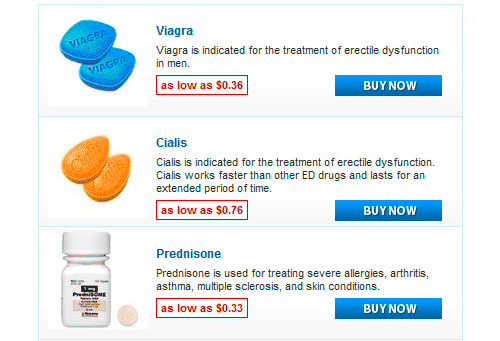

Oral Viagra, also known by its generic name sildenafil, is a medication primarily used to treat erectile dysfunction (ED) in men. It works by increasing blood flow to the penis, facilitating an erection in response to sexual stimulation. This isn’t a spontaneous effect; sexual stimulation is necessary for sildenafil to work.
How Sildenafil Works
Sildenafil inhibits an enzyme called phosphodiesterase-5 (PDE5). This enzyme normally breaks down cyclic guanosine monophosphate (cGMP), a molecule crucial for penile blood vessel relaxation. By inhibiting PDE5, sildenafil allows cGMP levels to rise, resulting in increased blood flow to the penis.
Important Considerations Before Use
- Consult your doctor: Before taking sildenafil, discuss your medical history, including any existing heart conditions, liver or kidney problems, or other medications you’re taking. Sildenafil may interact negatively with some drugs. Dosage: The correct dosage varies depending on individual needs and should be determined by your physician. It’s crucial to follow their instructions precisely. Side effects: Common side effects include headache, flushing, nasal congestion, and indigestion. More serious side effects are rare but possible. Seek medical attention if you experience any unusual symptoms. Contraindications: Individuals with certain heart conditions, such as unstable angina or uncontrolled high blood pressure, should avoid sildenafil. People with a history of stroke or severe liver or kidney disease should also be cautious.
Sildenafil and Pulmonary Hypertension
Beyond ED, sildenafil is also used to treat pulmonary arterial hypertension (PAH), a condition involving high blood pressure in the arteries leading to the lungs. In this context, it improves blood flow to the lungs.
Different dosages: The dosages used for PAH differ significantly from those for ED. Specific prescription: This application requires a specific prescription from a healthcare professional and should not be self-administered.
Remember, this information is for educational purposes only and does not substitute for professional medical advice. Always consult your doctor before starting any new medication.